Last week at the H&G 2026 Conference held in Šibenik, Infraplan team presented three posters based on papers published for the conference:
SCOUR PROTECTION SOLUTIONS FOR OFFSHORE WIND MONOPILES
Armourstone is widely used for scour protection of offshore wind monopile foundations, but design approaches vary and lack clear comparison. This study evaluates three methods (De Vos et al. (2011) Static, De Vos et al. (2012) Dynamic, and DNV RP-0618 (2022)) under identical conditions. Results show significant variation in required stone size (9.1–32.7 cm) due to differing design assumptions. Wave height and water depth have the greatest influence, while current velocity is less significant. The DNV method yields the smallest stone size, while the Dynamic approach reduces parameter sensitivity. Further validation is needed to address differences between methods.
Poster Scour Protection Solutions
A MODEL FOR URBAN FLOOD RISK ASSESSMENT FOLLOWING DAM FAILURE
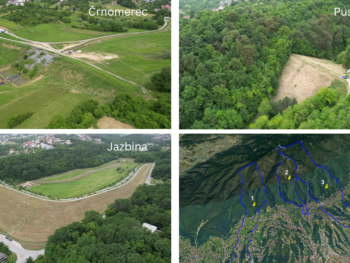
This study examines flash-flood risks in catchments from Medvednica Mountain to Zagreb, focusing on three retention systems: Črnomerec, Pusti dol, and Jazbina. It analyzes cascading multi-hazard scenarios where earthquakes and extreme rainfall may reduce retention performance, potentially leading to dam failure and urban flooding. Within the CRISAFE project, these interactions are modeled using Bayesian Belief Networks (BBNs), linking hazards, infrastructure response, and impacts while accounting for uncertainty. The approach supports risk-informed decision-making for urban resilience and emergency planning.
Poster A model for Urban Flood Risk
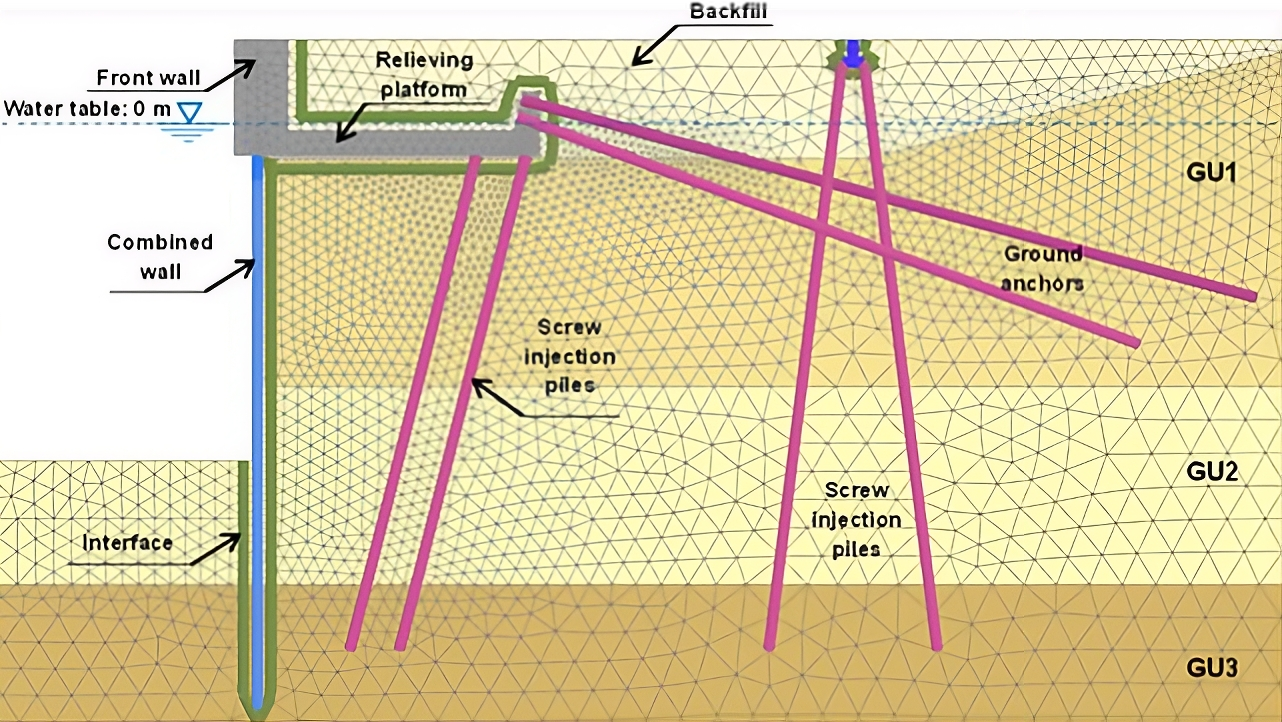
RESILIENCE AND SUSTAINABILITY IMPACT ASSESSMENT FRAMEWORK FOR PORT QUAY WALLS
Ports are increasingly exposed to climate-related hazards, threatening their operations. The Horizon Europe CLARION project addresses this through research on port infrastructure resilience across major European ports. This paper presents an impact assessment framework based on Key Performance Indicators (KPIs) grouped into reliability, operational efficiency, economic, environmental, and technical aspects, and structured across preparedness, response, and recovery phases. Applied to a pilot at the Port of Rotterdam, results show that Digital Twin technologies and remote sensing enable data-driven condition assessment, improving reliability, reducing costs, and supporting sustainable, climate-resilient port management.
Poster Resilience and Sustainability
The conference provided an excellent opportunity to gain new knowledge through presentations and discussions, exchange experiences, and explore the latest developments in water management and geotechnical engineering.
We would like to thank the Faculty of Civil Engineering, University of Zagreb and Civil Engineering Faculty Center for the excellent organization of the event.