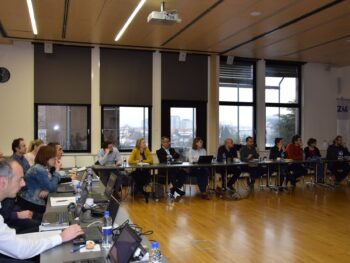

In the second half of May, Budapest hosted the Transport Research Arena (TRA) 2026, one of Europe’s leading conferences dedicated to transport research and innovation. Bringing together researchers, industry representatives, policymakers, infrastructure owners, and civil society, the event provided a platform for discussing the future of mobility and the role of innovation in addressing emerging transport challenges.
Infra Plan Consulting actively contributed to the conference programme through participation in panel discussions and scientific presentations, showcasing research and project results aimed at supporting more resilient, safer, and sustainable transport infrastructure across Europe.
Contributing to the Discussion on Resilient Ports and Sustainable Transport
Infra Plan participated in two panel sessions through its involvement in the Horizon Europe projects CLARION and OLGA.
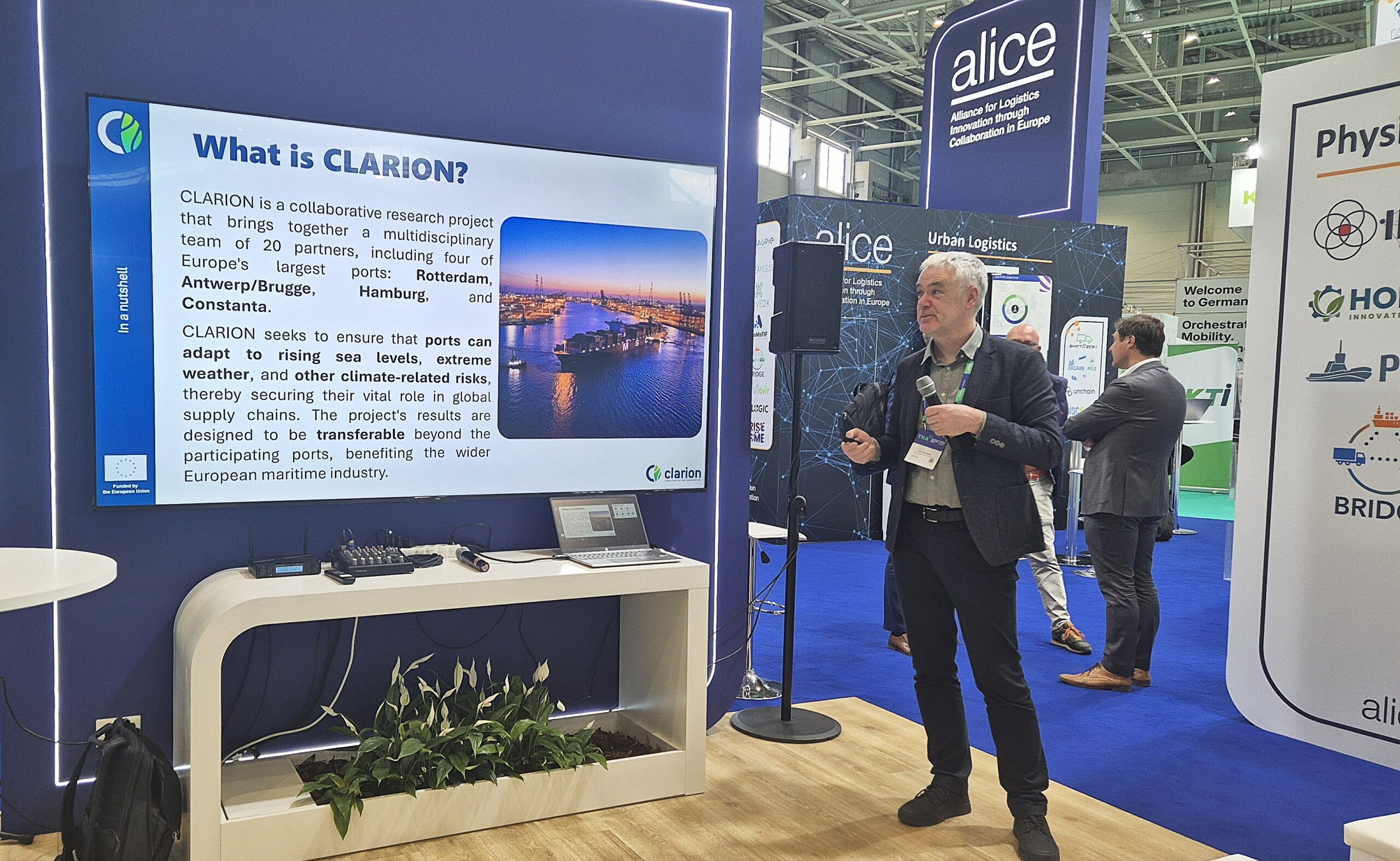
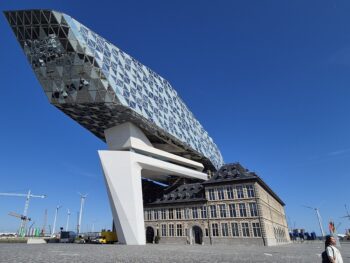
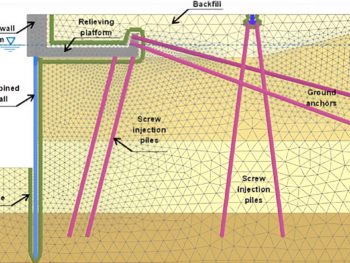
As part of the session “Resilient Ports, Smarter Futures: Lessons from CLARION and SAFARI Projects”, CLARION Project Scientific Coordinator Kenneth Gavin presented lessons learned from both projects, highlighting how research and innovation can help ports strengthen infrastructure resilience, improve operational continuity, and better prepare for the impacts of climate change.
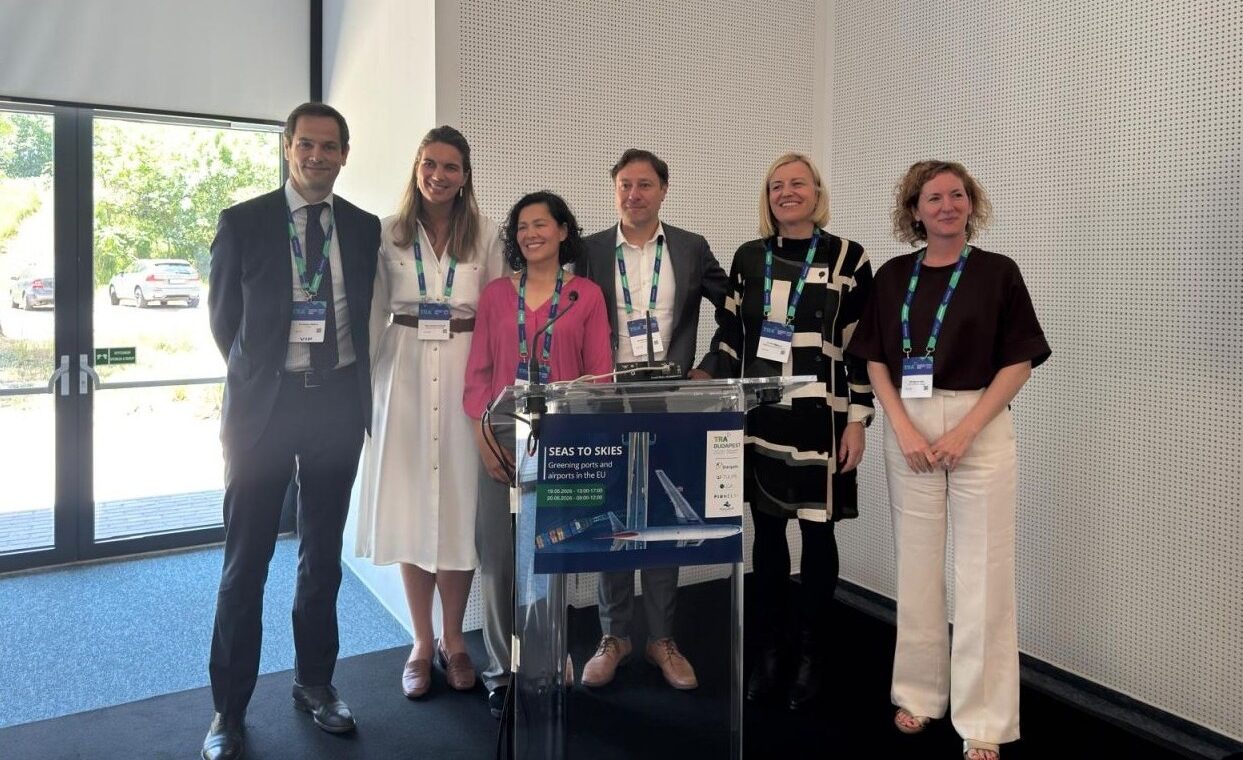
Infra Plan also contributed to the conference’s session on the regeneration of sustainable ports and airports through the OLGA project. The discussion showcased innovations across aviation, ports, and multimodal logistics, while emphasizing that the transition towards cleaner and smarter transport systems requires not only technological advancements but also the successful resolution of regulatory, market, and societal challenges that influence the uptake and transferability of innovative solutions.
Presenting Research on Digital Transformation of Transport Infrastructure
Alongside the panel discussions, Infra Plan contributed to the scientific programme with the presentation of two research papers demonstrating how digital technologies can support the transformation of transport infrastructure management.
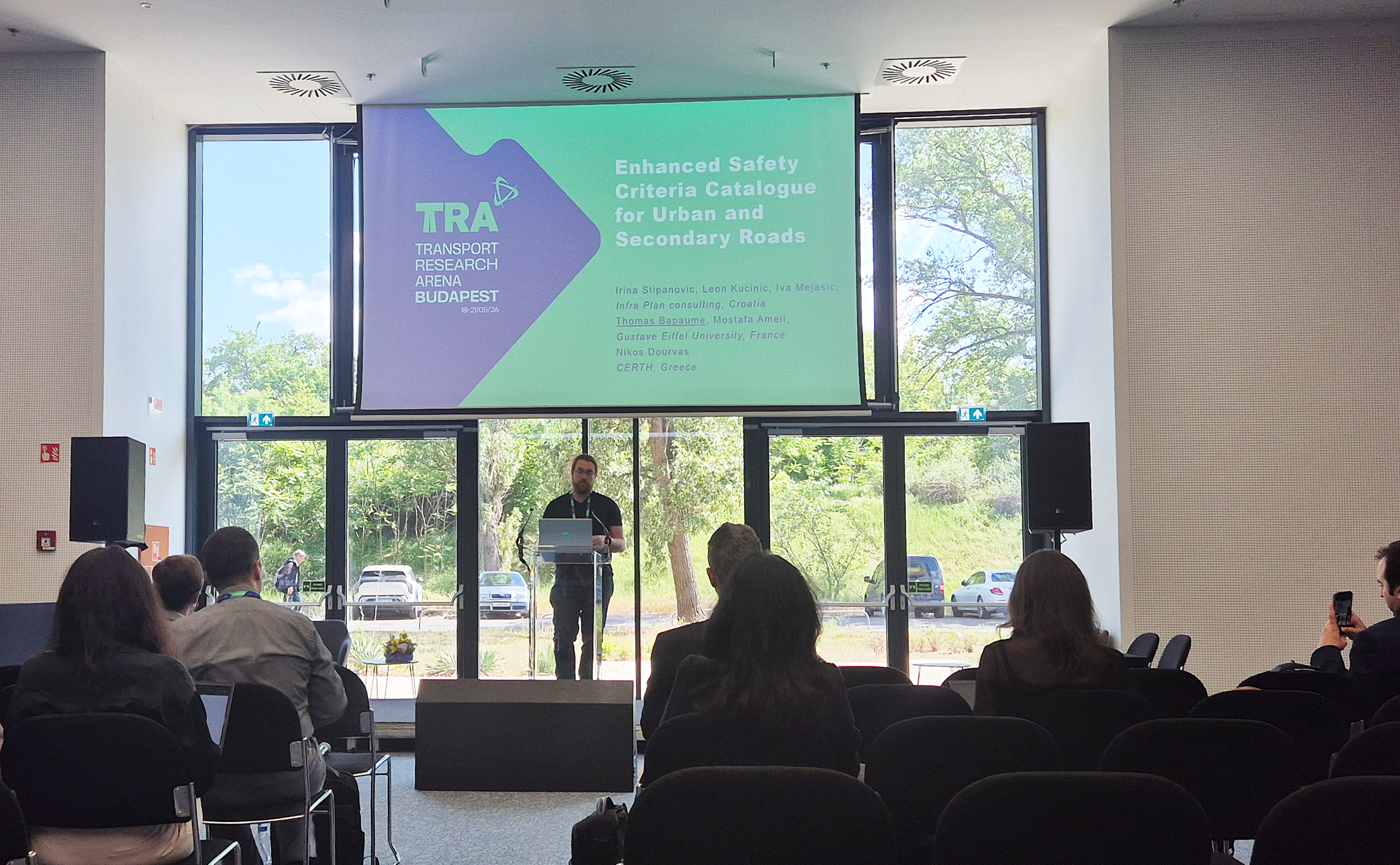
The first paper, “Enhanced Safety Criteria Catalogue for Urban and Secondary Roads”, developed within the iDriving project, introduced a new generation of road safety performance indicators. By combining infrastructure, vehicle, road user, and traffic management data with AI-driven analytics and real-time monitoring, the proposed framework supports more dynamic safety assessment and proactive road safety management in line with the EU Road Safety Policy Framework 2021–2030 and the Vision Zero ambition.
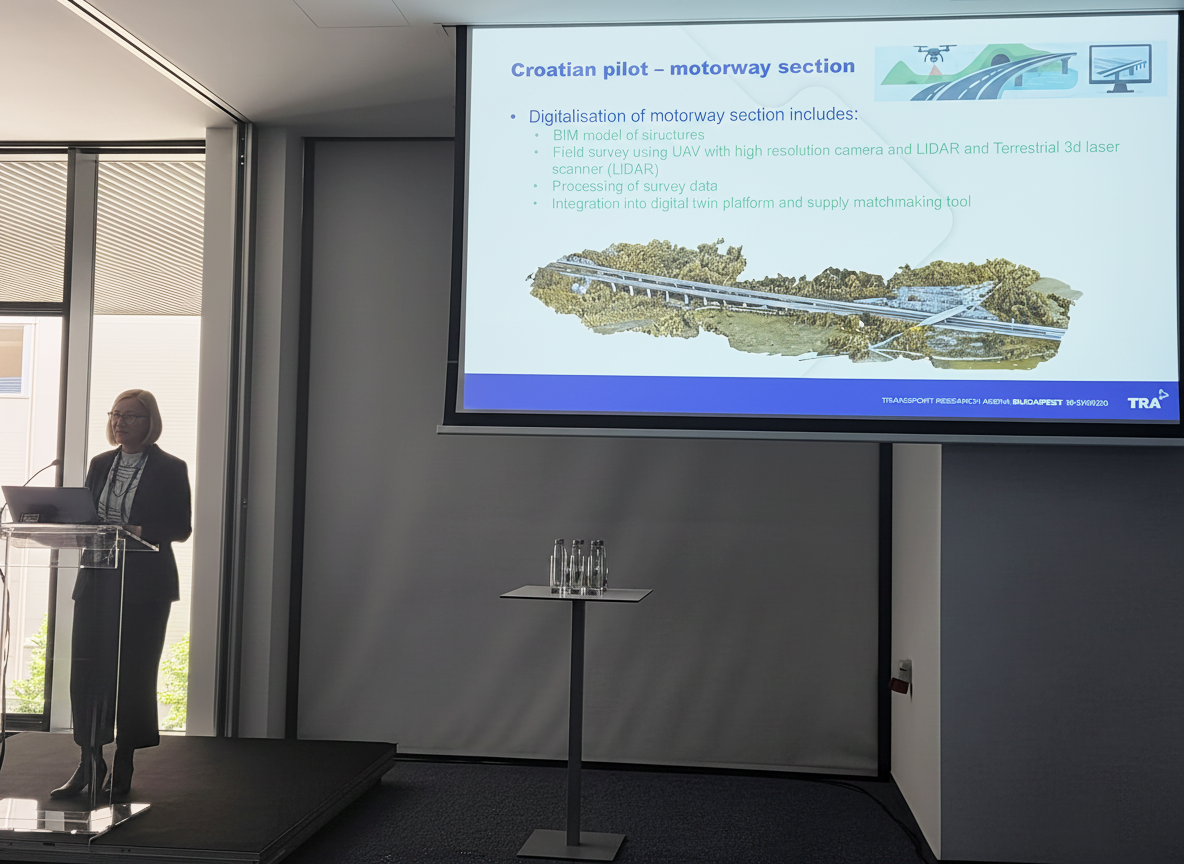
The second paper, “Digitalization and Circularity in Transport Infrastructure: A Pilot Study on the Croatian Motorways Network”, presented results from the CIRCUIT project. The research explored how digital twins, UAV-based inspections, and circularity indicators can support sustainable infrastructure asset management. Using the Croatian motorway network as a pilot case, the study demonstrated how digital tools can enable infrastructure owners to move towards condition-based, risk-informed, and circular decision-making processes.
Although addressing different aspects of transport infrastructure, both papers highlighted the growing importance of digitalisation, data-driven decision-making, and innovative performance indicators in achieving safer, more resilient, and more sustainable transport systems.